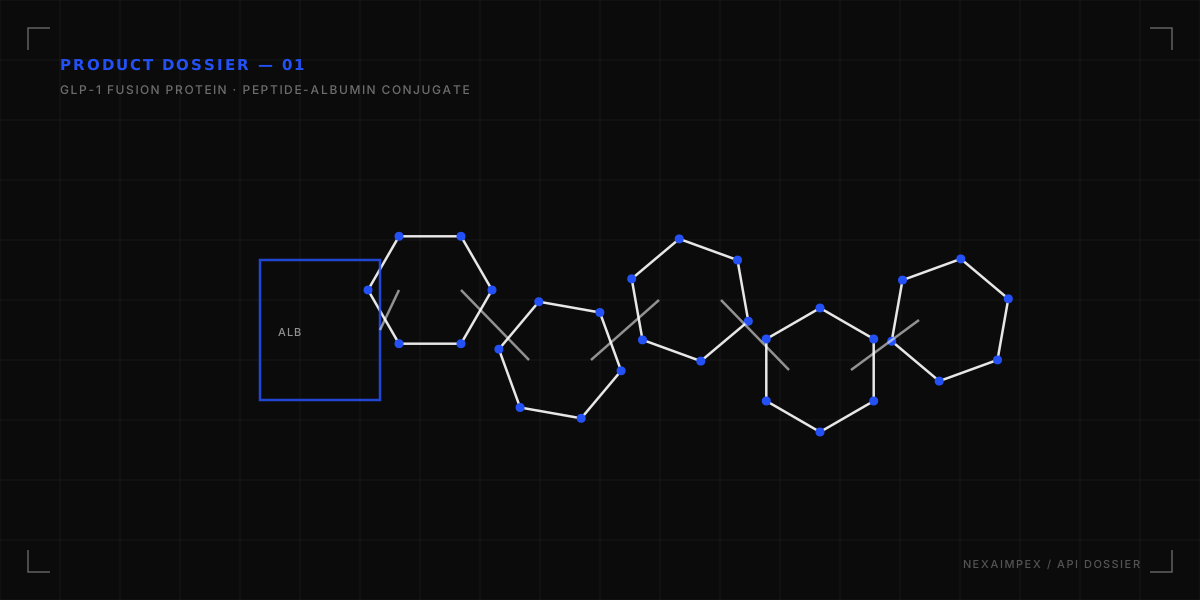
Albiglutide is a long-acting glucagon-like peptide-1 (GLP-1) receptor agonist, built by fusing two copies of a modified GLP-1 peptide to human albumin. That albumin backbone is what gave it a long circulating half-life and made once-weekly dosing possible — a meaningful engineering solution at the time it was developed for adults with type 2 diabetes.
Buyers researching "albiglutide API manufacturer in India" are usually trying to answer one of two questions: is this molecule still in active commercial production, and who can supply it with proper documentation? Both questions deserve a straight answer.
The current supply picture
Albiglutide's originator discontinued the branded product globally in 2017–2018. That decision was driven by commercial performance — modest weight-loss outcomes compared to newer GLP-1 agents and a device that required powder reconstitution — rather than any safety finding. No generic manufacturer subsequently developed or registered a biosimilar version, so albiglutide sits outside the active commercial API trade that most buyers are used to for small-molecule generics.
Where NexaImpex fits
As a division of Nexa Groups Unlimited, NexaImpex works as a sourcing and export partner across a wide range of pharmaceutical raw materials, including peptide-based and biologic-adjacent categories used in diabetes care research. For molecules in this class, our role is to:
- Confirm current manufacturing and regulatory status before quoting, so buyers aren't sold a product that isn't genuinely available at scale
- Coordinate documentation — COA, MSDS and applicable regulatory filings — for whichever GLP-1 class API is actually in active production
- Point buyers toward comparable, currently marketed GLP-1 receptor agonists when albiglutide itself isn't a viable sourcing path
- Support due diligence with manufacturing partners across India's pharmaceutical belt
A quick technical primer
For teams that need the background: albiglutide activates the GLP-1 receptor on pancreatic beta cells, promoting glucose-dependent insulin release, suppressing glucagon output, and slowing gastric emptying. Because it's a large fusion protein rather than a small molecule, its manufacturing route — recombinant expression, purification and formulation — is fundamentally different from the synthetic chemistry used for most oral APIs, which is one reason supply chains for this molecule look different from, say, an SNRI or an analgesic.
If you're evaluating a GLP-1 class ingredient for research, reference, or a formulation project, our team can walk through what's realistically sourceable today, along with the documentation that should accompany it.